

Case study
Delivering a utility-scale electrolyser monitoring system
Delivering critical diagnostic capability amid uncertainty and rapid system evolution
Engagement summary
The challenge
Rapidly evolving pilot environment with undefined interfaces and unclear requirements.
Our approach
A lightweight, systems-led framework to define boundaries, control interfaces, and verify performance.
Outcomes
Successful first-pass FAT, zero late-stage rework, and on-time delivery of over 1,000 units.
The challenge: integration in a fluid R&D environment
The team was tasked with delivering a critical monitoring module for a pilot-stage hydrogen electrolyser. The module required precise per-cell diagnostics and integration with a plant-level SCADA system.
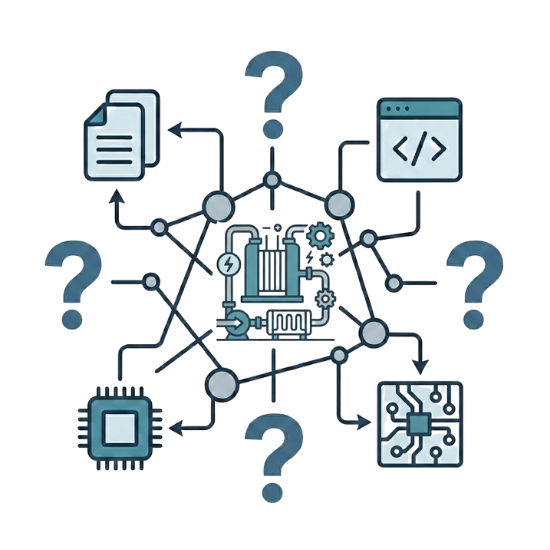
However, the broader system design was in flux. Subsystem interfaces—mechanical, electrical, and data—were evolving in parallel, often without a clear mechanism to assess the downstream impact of changes.
In this environment, integration risks typically surface late during testing. This leads to costly rework, schedule delays, and eroded stakeholder confidence.
Our approach: establishing a shared technical baseline
Embedded as technical delivery lead, Navitect applied a practical systems framework to align teams and proactively manage integration risk.
Subsystem boundary definition
Defined the specific responsibilities of the monitoring module in context of the broader system-level electrolyser architecture. This established a clear functional and structural boundary, and a basis for defining clear technical requirements.
Interface definition and control
Defined all mechanical, electrical, and data interfaces. This ensured design alignment across interacting subsystems and enabled the objective assessment of changes during design, preventing integration failures.
Requirements-led verification
Coordinated verification activities across the team using a risk-weighted approach, and where requirements explicitly define success criteria.
Risk-based reporting
Led milestone design reviews, reporting progress against requirements and broader technical objectives. This facilitated informed trade-offs and aligned expectations throughout the project.

Outcome: predictable delivery at scale
Early, structured definition and change management enabled the team to ‘left-shift’ integration risk.
First-pass success: successful Factory Acceptance Testing with only minor firmware refinements.
Rapid Scale: over 1,000 monitoring modules delivered and deployed within six months.
Risk Mitigation: integration issues were identified during the design phase, avoiding late-stage rework.
Client Satisfaction: all functional and performance requirements were met in full.

This engagement demonstrates how Navitect enables effective delivery in fast-moving, high-uncertainty environments through a pragmatic, Agile systems approach. Early definition and interface control mitigate integration risk, preventing costly late-stage rework.